
For great Atlas Mountains photography, plan around the soft light of early morning and late afternoon, when a low sun sculpts the ridges, terraced fields and rammed-earth villages. Around Ouirgane, the lake, the Tizi n’Test road and the valley hamlets offer very different pictures within an hour of each other. Two golden rules: always ask before photographing someone, and leave your drone at home unless you have authorisation.
Key facts
- Best light: the first hour after sunrise and the last hour before sunset
- Top spots: Lake Ouirgane, the Tizi n’Test hairpins (about 2,100 m), terraced villages, Tinmel
- Seasons: snowy peaks from winter into spring, almond blossom from late January to March depending on altitude
- Portraits: always ask permission, especially with women and older people
- Drones: tightly controlled in Morocco, with import subject to prior authorisation
When is the best time for Atlas Mountains photography?
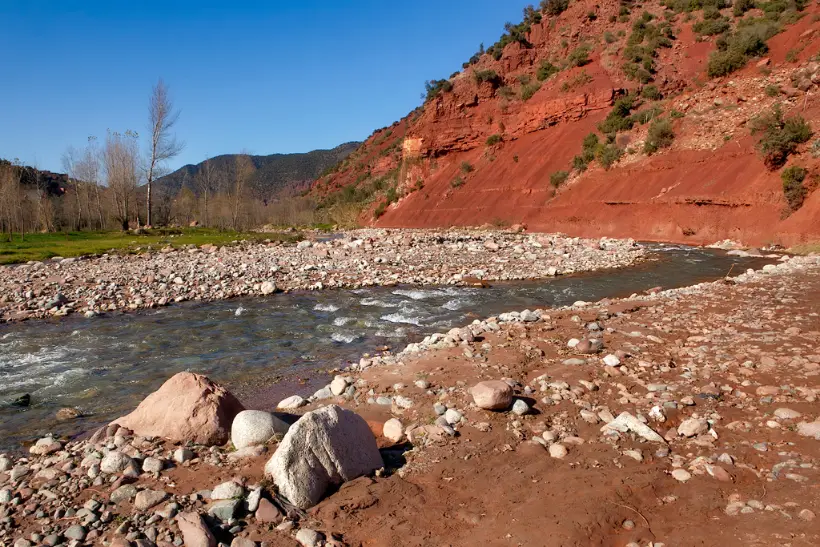
Each season has its own palette. In spring, barley fields are green, orchards blossom, rivers run full and the peaks are still white. Summer brings harsh light and often some heat haze, so head out early and watch for afternoon storm clouds, which are very photogenic. In autumn, poplars and walnut trees turn gold and the air clears after the first rains. Winter offers crystal-clear air, snow on the Toubkal massif and a low sun that stays soft all day.
Through the day, golden hour and blue hour give the finest images; between roughly 11 am and 3 pm, focus on details, shadowy alleys or interiors. For an overview of the range, the High Atlas article on Wikipedia is a good start.
What are the best photo spots around Ouirgane?
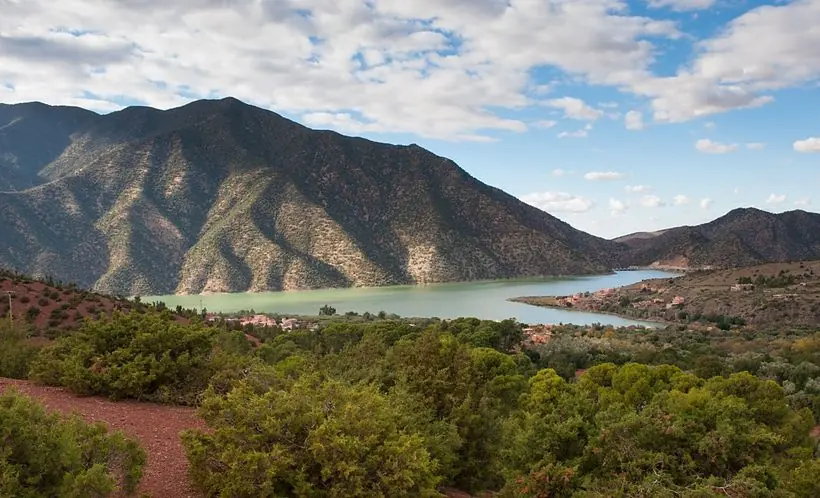
Lake Ouirgane
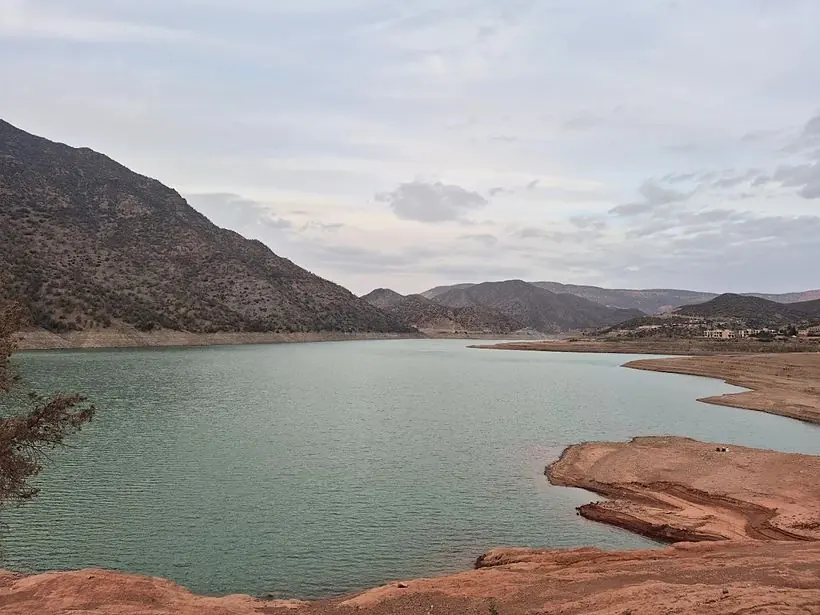
At sunrise on a still day the water mirrors the mountains and the shores turn ochre. The lake level varies with the seasons and rainfall, which changes the scenery a great deal from one visit to the next. A wide-angle captures the reflections, while a telephoto picks out details on the far shore. Find out how to reach it in our article on Lake Ouirgane and its dam.
The Tizi n’Test road
The R203 climbs in hairpins to the pass at around 2,100 m, with huge views over the N’Fis valley. Only stop in safe, open places, never on a bend. After storms, in winter, and with the roadworks under way since the 2023 earthquake, check road conditions first; our guide to the Tizi n’Test pass covers the drive in detail.
Villages and Tinmel Mosque
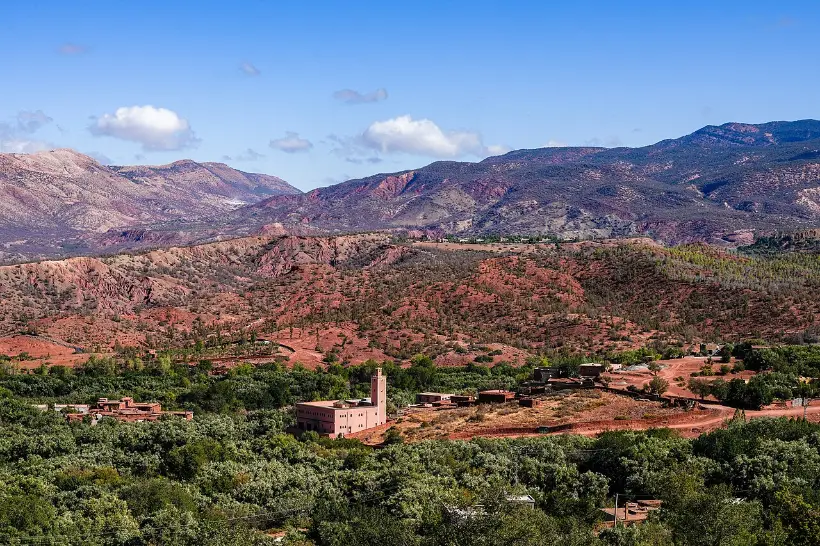
Rammed-earth houses, terraces, walnut trees and irrigation channels make superb scenes, best discovered with a local guide. Some 40 km along the R203, the 12th-century Almohad Tinmel Mosque was badly damaged in 2023 and is being restored, so check access before you go.
What kit should you bring to photograph the Atlas?
- A wide-angle lens (around 16–35 mm) for landscapes and alleys.
- A telephoto (70–200 mm) to compress layered ridges and isolate a village.
- A light tripod, a polarising filter for skies and reflections, and perhaps a graduated filter.
- Spare batteries, which drain fast in the winter cold, plus a power bank.
- A cloth and dust protection, as the wind often lifts sand from the tracks.
With a smartphone, HDR and panorama modes already work wonders; just remember to wipe the lens.
How do you photograph local people respectfully?
In villages and at the souk, always ask before taking someone’s picture: a gesture towards the camera and a smile are enough, and a refusal should be respected without insisting. Many women and older people prefer not to be photographed, for reasons of modesty or belief. For children, ask their parents. Starting a conversation, buying something or showing the picture on your screen often leads to a genuine exchange. Finally, avoid photographing police posts, roadblocks, official buildings and military sites.
Can you fly a drone in Morocco?
In practice, it is very difficult for a visitor. In Morocco, importing and flying a drone require prior authorisation from the authorities, and unauthorised drones are frequently held at customs on arrival. Even with permission, avoid flying over people, villages, roads or sensitive sites. Rules can change, so check with the Moroccan embassy before you travel; if in doubt, leave your drone at home.
Can you photograph the High Atlas at night?
Yes, and it is one of the great pleasures of the mountains: far from the cities, the Milky Way stands out clearly on moonless nights. A tripod, a fast wide-angle lens and an exposure of about 20 seconds are enough to get started; all our tips are gathered in our article on stargazing in Morocco.
Read next: Easy hikes in the Atlas Mountains for families and beginners
Where should you stay for Atlas Mountains photography?

Staying on site changes everything: you are by the lake at golden hour without having driven from Marrakech, about 1 hour 15 minutes away. From the auberge, the Tizi n’Test and Tinmel are within driving distance, and our hikes with a local guide lead to villages and viewpoints away from the road. For a look at the place, browse our auberge photo gallery, then book your stay direct or message us on WhatsApp.
Frequently asked questions
Can you take photos of people in Morocco?
Yes, as long as you ask the person’s consent before pressing the shutter and accept a possible refusal. In very touristy places, some performers or water sellers ask for a small coin in exchange for a photo, so decide before you shoot.
Do you need to declare a drone at Moroccan customs?
A drone needs prior authorisation from the Moroccan authorities before it enters the country; without it, it is likely to be held at customs. Procedures can change, so check the current rules with the Moroccan embassy well before your trip.
What is the best season for photography in the Atlas?
Spring, from March to May, combines green fields, blossoming orchards and snowy peaks, while autumn brings warm colours and clear air. Winter is superb for snow; summer is harder because of the harsh light and heat haze.
Is a smartphone good enough for Atlas photos?
Yes, recent smartphones produce excellent landscape shots, especially in soft light using HDR and panorama modes. A small tripod or steady support also lets you try night photos with night mode.
Good tips from the High Atlas
One letter per season: hikes, Rachida’s recipes and early availability. No spam.