
Climbing Mount Toubkal (4,167 m), the highest peak in North Africa, usually takes two days from the village of Imlil, with a night in a mountain refuge at around 3,200 m. In summer it is a demanding hike with no rock climbing; in winter it becomes a snow ascent that calls for crampons and an ice axe. A licensed mountain guide is now required to go to the summit.
Key facts
- Height: 4,167 m, the highest point of the High Atlas and of Morocco
- Trailhead: Imlil (about 1,740 m), roughly 1 h 30 by road from Marrakech
- Duration: 2 days as standard, 3 days for a more gradual ascent
- Height gain: about 1,450 m on day one, nearly 950 m on summit day
- Best seasons: late May to October without snow; winter for equipped walkers only
- Rules: licensed mountain guide required since late 2018 (check current regulations)
Where is Toubkal and why climb it?
Jebel Toubkal rises at the heart of Toubkal National Park, Morocco's first national park, created in 1942, some 65 km south of Marrakech. On a clear day the summit reveals the ridges of the High Atlas, the Haouz plain and, to the south, the ranges leading towards the Anti-Atlas. For many travellers it is their first 4,000-metre peak: within reach without alpine experience in summer, yet committing enough to feel like a genuine achievement.
What does climbing Mount Toubkal involve?

Day 1: Imlil to the refuge
The trail leaves Imlil, passes through the village of Aroumd (around 1,900 m) and follows the Aït Mizane valley up to the shrine of Sidi Chamharouch at about 2,300 m. The shrine itself is reserved for Muslims, but small stalls nearby sell drinks and snacks to walkers. The path then steepens towards the refuges at roughly 3,200 m, below the south face: allow 5 to 6 hours of walking, depending on your pace. Mules can carry your main bags as far as the refuge.
Day 2: summit and descent
You set off before dawn by head torch, up the south cirque (Ikhibi Sud): scree, boulder fields and sustained slopes lead to the summit ridge and the metal pyramid that marks the top. Allow 3 to 4 hours up, then the long descent back to Imlil, making a day of 8 to 10 hours in total. Our Toubkal 2-day trek itinerary covers the timings and the 3-day alternative in detail.
How hard is Toubkal?
In summer the normal route has no technical section, but the challenge is real: a big height gain, loose stony ground and thinner air above 3,000 m. You need solid fitness, meaning the ability to walk 6 to 8 hours a day in the mountains. Headaches and tiredness linked to altitude are common, so learn to recognise the warning signs before you go and never hesitate to turn back. From December to March, snow and ice turn the route into a winter ascent: crampons, an ice axe and a guide experienced in winter conditions become essential.
Do you need a guide or a permit?
Since late 2018 the Moroccan authorities have required walkers to be accompanied by a licensed mountain guide on Toubkal, and passports are usually registered at checkpoints and at the refuge. Rules can change, so check them before you travel. As far as we know, there is no permit to buy online; your guide handles the formalities. Everything is explained in our article do you need a guide for Toubkal?.
When should you go?
The ideal windows are late May to June and September to mid-October: dry paths, bearable temperatures and quieter refuges than in high summer. July and August are perfectly possible, but the valley is hotter, the trail busier and afternoon thunderstorms are not unusual. Our article on the best time to climb Toubkal goes through every season, month by month.
How much does climbing Mount Toubkal cost?
Your budget depends on the season, the size of your group and the level of service. Add up transport to Imlil, the guide's fee, a night in the refuge on half board, a mule and muleteer if you want one, and tips. The larger the group, the lower the cost per person. Prices change regularly, so rather than quote a rough figure we prefer to send you an up-to-date estimate: get in touch with your dates. For your rucksack, broken-in boots, warm layers and a head torch are the bare minimum.
Why stay in Ouirgane before and after the summit?
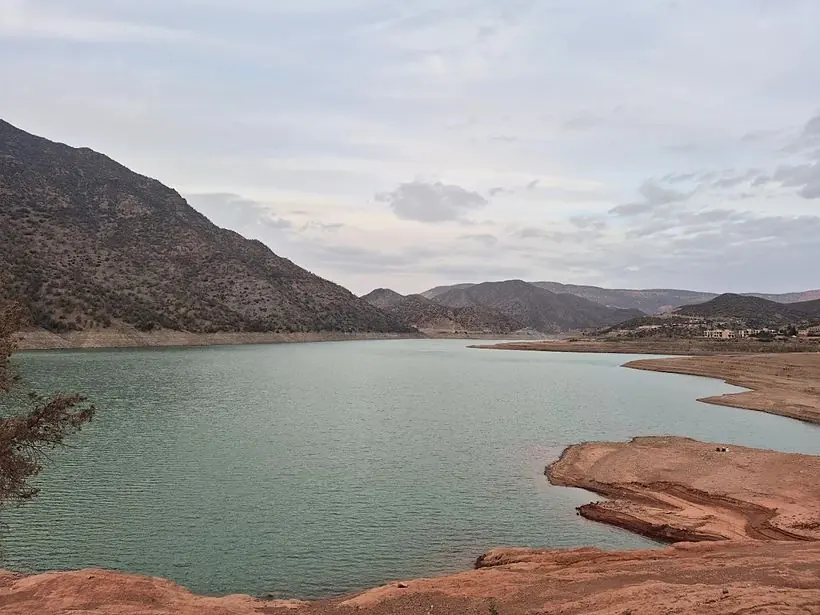
Ouirgane sits at around 1,000 m, 30 to 45 minutes' drive from Imlil via Asni, and makes a calm base so that you arrive rested: a night by the lake after the drive from Marrakech means you don't start the climb already tired. Afterwards, the garden pool (best from spring to autumn), a proper bed and a home-cooked tagine do wonders for weary legs. Our family suites and double suite all have a private bathroom, air conditioning and free Wi-Fi, with a homemade breakfast included. We also organise hikes with a local guide in the valley, ideal for warming up the day before.
Read next: Mountain Biking in the Atlas Mountains: Routes, Seasons, Tips
Book your base at the foot of Toubkal
Planning your Toubkal climb? Send us your dates and we will help you arrange the transfer from Marrakech, your night in Ouirgane and an introduction to a certified guide. Book your suite direct, with no middleman and no online payment, or message us on WhatsApp.
Frequently asked questions
Can a beginner climb Mount Toubkal?
Yes, in summer a fit walker can reach the summit without any mountaineering experience, as the normal route involves no rock climbing. You do need to be used to long days on foot and to accept the effects of altitude. In winter, previous experience of walking in crampons is strongly recommended.
Where do you sleep when climbing Toubkal?
You spend the night in one of the refuges at around 3,200 m, in dormitories with dinner and breakfast. Booking ahead is wise in high season, and your guide can arrange it for you. Many walkers also add a night in Imlil or Ouirgane before setting off.
What is the highest mountain in North Africa?
Jebel Toubkal, at 4,167 m, is the highest mountain in North Africa and in the whole Atlas range. It stands in Morocco's High Atlas, inside Toubkal National Park. Its usual starting point, Imlil, is about 1 h 30 by road from Marrakech.
Can you climb Toubkal in one day?
It is possible for very fit, already acclimatised walkers, but it means roughly 2,400 m of ascent and the same in descent in a single day. We advise most travellers against it, because climbing too fast increases the risk of altitude sickness. The two-day format remains the sensible choice.
Good tips from the High Atlas
One letter per season: hikes, Rachida’s recipes and early availability. No spam.
