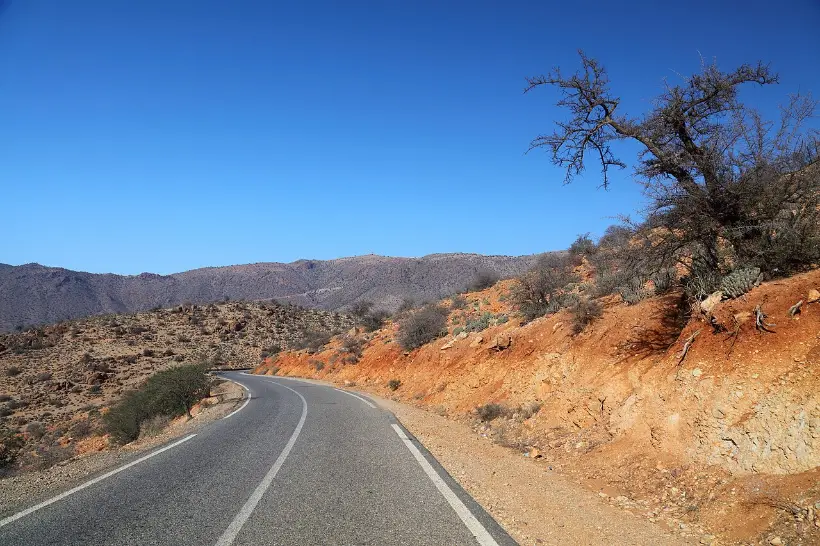
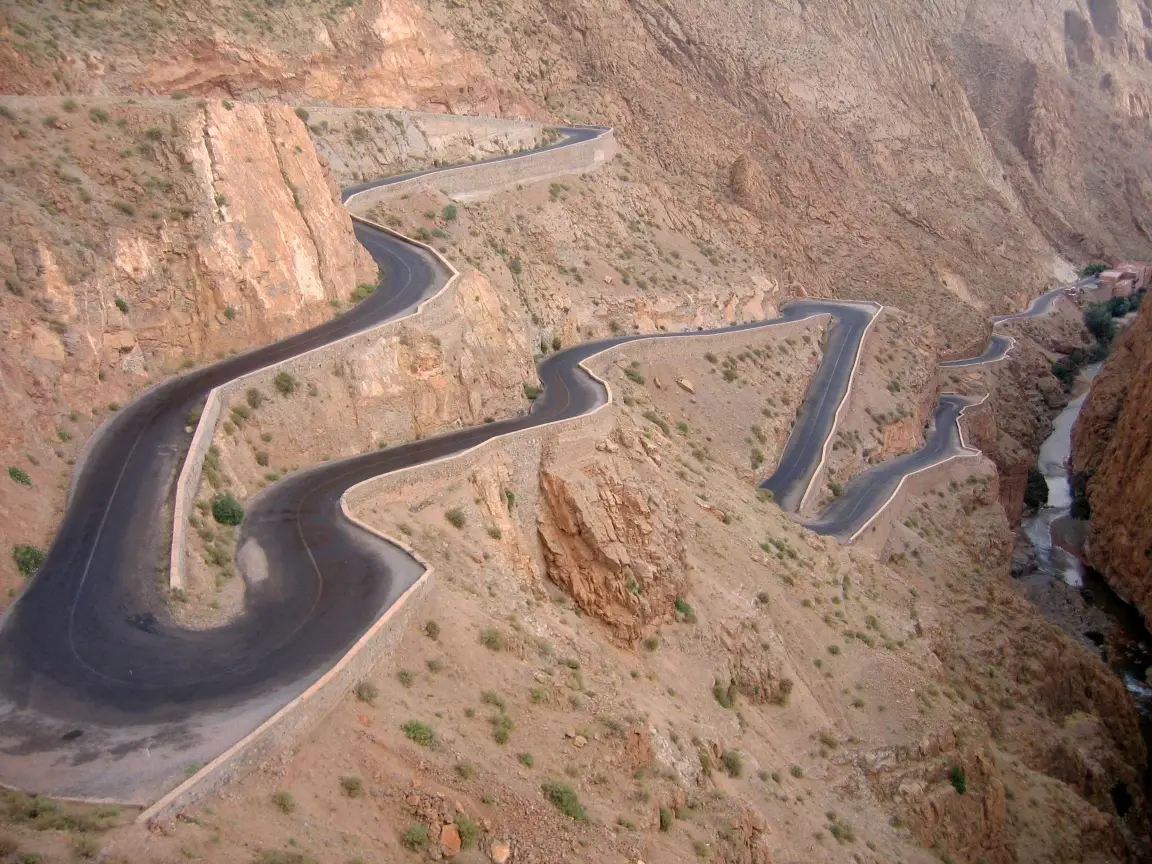
Driving in the Atlas Mountains is perfectly manageable in a hire car from Marrakech: the road to Ouirgane is tarmacked and you do not need a 4x4. You do, however, need to adapt to hairpin bends, livestock, police checkpoints and nightfall, which comes quickly in the mountains.
Key facts
- Marrakech to Ouirgane: about 60 km and 1 hour 15 minutes on the R203, via Tahannaout and Asni
- Driving is on the right; limits are generally 60 km/h in towns, 100 km/h on main roads and 120 km/h on motorways
- A 4x4 is unnecessary for Ouirgane, Imlil and the tarmacked Tizi n'Test road
- Fuel: fill up in Marrakech or Asni before the mountains
- Frequent gendarmerie checkpoints at the entrance to towns and villages
- Golden rule: reach your destination before dark
Do you need a hire car for driving in the Atlas Mountains?
Not necessarily, but it is the most flexible way to explore the High Atlas at your own pace. International and local agencies are plentiful at the airport and in town. Bring your valid national driving licence, your passport and a credit card for the deposit; depending on your nationality and the company, an International Driving Permit may be required, so check before you travel. When you collect the car, photograph it from every angle, check the tyres, the spare wheel and the air conditioning, and read the insurance excess. A small car is fine on tarmac; extra ground clearance helps on village tracks, which most contracts exclude anyway.
What are the rules of the road in Morocco?
Traffic drives on the right and limits are generally 60 km/h in built-up areas, 100 km/h on main roads and 120 km/h on motorways, unless signs say otherwise. Fixed and mobile speed cameras are common. Make sure every passenger wears a seat belt, never hold your phone while driving and do not drink at all if you are behind the wheel: the rules are strict. At roundabouts, follow the signs and stay alert, as not everyone gives way in the same manner. If you are travelling with young children, ask the hire company for suitable child seats when you book. Fines are usually paid on the spot against a receipt. Rules change, so check the latest information with your hire company.
What happens at police checkpoints?
At the entrance and exit of towns and villages, the Royal Gendarmerie regularly sets up checkpoints, marked by a stop sign and sometimes a stinger. Slow right down, stop if an officer waves you over, greet them politely and show your licence, vehicle papers, rental agreement and insurance certificate, which you should keep in the glovebox. In the vast majority of cases the check is quick and courteous, especially if you respect the speed limits, which are closely monitored through villages.
How should you tackle mountain roads?
Hairpins and narrow roads
After Asni the road winds between gorges and hills. Keep well to the right, never overtake on a bend or a solid line, and use engine braking on descents. A short toot of the horn before a blind bend is a useful local habit. Beyond Ijoukak, towards the Tizi n'Test, the road narrows and works have been ongoing since the 2023 earthquake, so check conditions before setting off.
Animals, pedestrians and two-wheelers
Sheep, goats, mules and donkeys cross without warning, children walk along the verge and cyclists grind slowly up the passes. Grand taxis sometimes stop abruptly to pick up passengers. Drive at a speed that lets you stop at any moment.
Fuel and mobile coverage
Petrol stations are plentiful as far as Asni and scarcer afterwards. Carry cash, as cards are not always accepted. Mobile coverage is patchy in the valleys, so download offline maps and be wary of sat-navs suggesting dirt-track shortcuts.
Is driving in the Atlas Mountains safe in winter and at night?
In winter, snow can temporarily close high passes such as the Tizi n'Test, and black ice lurks on shaded bends in the morning. At Ouirgane's altitude, around 1,000 m, snow is generally rare, but check the forecast. After a storm, watch out for falling rocks and never cross a flooded ford. At night the roads are unlit, and pedestrians, carts and animals become almost invisible. Set off early enough to arrive before dusk.
Where can you park when you reach Ouirgane?

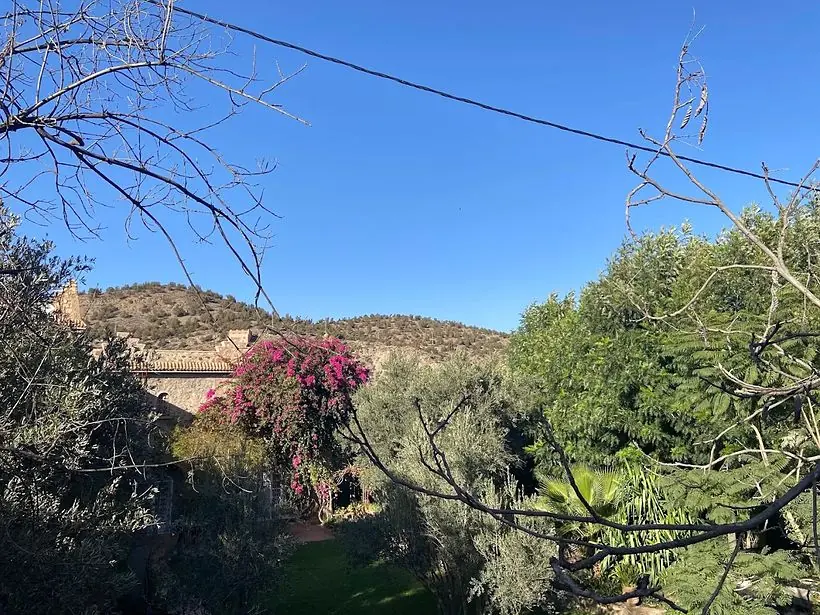
At Auberge Le Mouflon, parking is free on site, so you can leave the car and forget the wheel until your next outing. From Ouirgane, the great drives begin: Imlil is about 40 minutes away, the Tinmel Mosque about an hour, then the pass. Read our guide to the Tizi n'Test pass road, the full route from Marrakech to Taroudant through the mountains and all the options for getting from Marrakech to Ouirgane.
Read next: Motorcycle Tour in Morocco: The High Atlas Mountain Passes Loop
Book your stop in the Atlas
Would you rather not drive? We can arrange a transfer from Marrakech on request: get in touch with us or send us a WhatsApp message. And to enjoy driving in the Atlas Mountains without driving after dark, break your journey with us: book your suite in Ouirgane directly, with no middleman and no online payment.
Frequently asked questions
Do you need an International Driving Permit in Morocco?
It depends on your nationality and the agency: many visitors hire a car with their national licence, but some companies insist on an International Driving Permit. Check the conditions with your hire company and your own country's authorities before you travel.
Is the road from Marrakech to Ouirgane dangerous?
No, it is a busy tarmacked road, but it is winding after Asni, with lorries, taxis and sometimes animals. In daylight, at a moderate speed and without overtaking on bends, it is an easy drive of about 1 hour 15 minutes.
Can you pay for fuel by card in the Atlas Mountains?
Cards are often accepted at the larger stations in Marrakech, but this is not guaranteed in the mountains. Always carry cash and fill up before leaving the plain, as stations become scarce beyond Asni.
Can you drive a hire car on dirt tracks?
Most contracts exclude or limit driving off tarmacked roads, and your insurance may not cover you there. To reach remote villages, it is better to leave the car behind and set off on foot with a local guide.
Good tips from the High Atlas
One letter per season: hikes, Rachida’s recipes and early availability. No spam.