The Toubkal circuit trek is a 6–7 day loop from Imlil that circles Jebel Toubkal (4,167 m), crossing passes above 3,500 m, Berber villages and the shores of Lake Ifni, with the summit as an optional extra. It suits fit walkers used to back-to-back days of 5–8 hours, and is best done from late May to October with a licensed mountain guide and mules to carry the bags.
Key facts
- Duration: 6–7 days on foot, 5–8 hours a day
- Distance: roughly 70–90 km depending on the variant, with several thousand metres of ascent
- High point: Tizi n’Ouanoums pass (about 3,650 m), or 4,167 m with the summit
- Nights: village gîtes, camping and the Toubkal refuge (about 3,200 m)
- Season: late May to October; snow possible on the passes at other times
- Support: a licensed guide and a muleteer are strongly recommended
What is the Toubkal circuit?
It is the classic big loop of Toubkal National Park: rather than a quick up-and-down to the summit, you walk right round the massif through its valleys and passes. The scenery shifts every day, from the walnut groves of the Aït Mizane valley to the volcanic screes of the high cols, by way of the azibs, the summer shepherds’ huts where flocks graze in the warm months. For a sense of the massif’s geography, the Toubkal page on Wikipedia is a handy reference.
There are several variants, longer and shorter: some swing west through the Azzaden valley, others stretch further east. The itinerary below is the most common.
What are the stages of the Toubkal circuit trek?

Walking times are approximate and depend on the group and the season:
- Day 1: Imlil – Tizi n’Tamatert pass (about 2,280 m) – Tacheddirt, 4–5 h
- Day 2: Tacheddirt – Tizi n’Likemt pass (about 3,550 m) – Azib Likemt, 6–7 h
- Day 3: Azib Likemt – down the valley to the village of Amsouzart, 5–6 h
- Day 4: Amsouzart – Lake Ifni (about 2,300 m), 3–4 h
- Day 5: Lake Ifni – Tizi n’Ouanoums pass (about 3,650 m) – Toubkal refuge, 6–7 h
- Day 6: dawn ascent of Toubkal, then back to the refuge or all the way down to Imlil, 7–10 h
- Day 7: refuge – Imlil via the Aït Mizane valley, 4–5 h
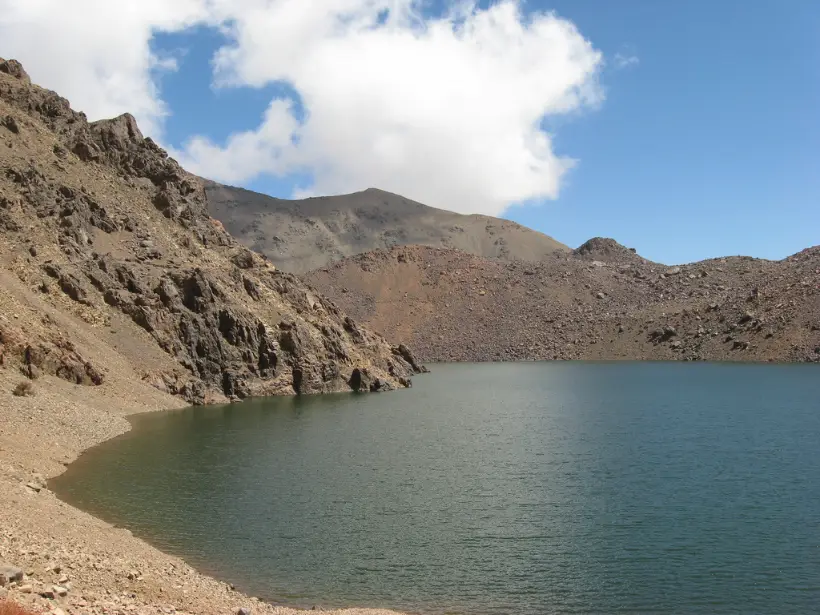
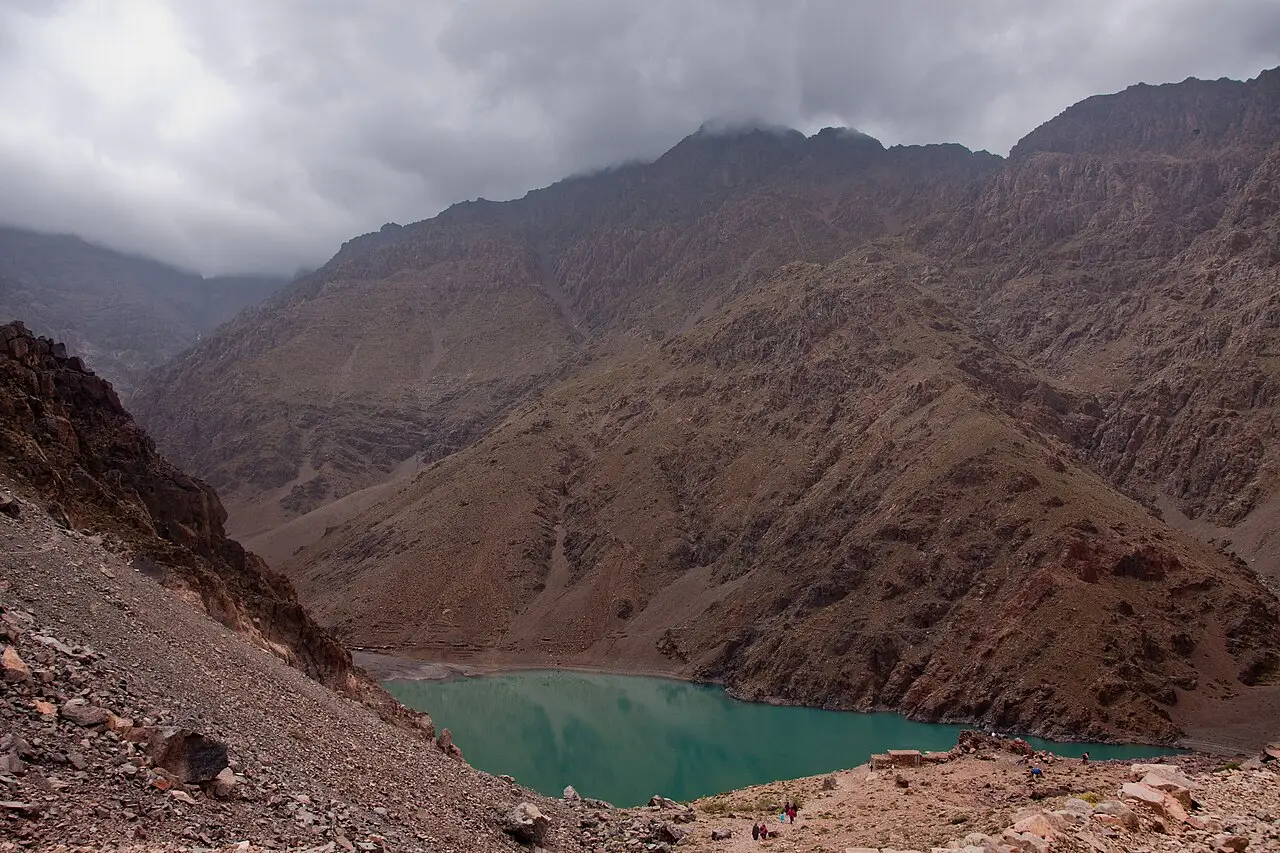
The lake stage is often the highlight: turquoise water in a bare, rocky cirque, perfect for a night under canvas. We cover it in our Lake Ifni trek guide. If you are short of time, descend straight to Imlil after the summit and finish in six days.
How hard is the Toubkal circuit trek?
It is not technical in summer (no climbing, no glaciers), but it is demanding. Days often involve 800–1,200 m of ascent, steep descents on loose scree (more than 1,300 m from Tizi n’Ouanoums down to Lake Ifni) and several nights above 2,000 m. You need to be comfortable walking day after day at a steady pace with a daypack.
Train with hilly walks in the weeks beforehand and plan a gradual acclimatisation, as altitude sickness can appear above 3,000 m. If you have a health condition, ask your doctor for advice before booking.
Where do you sleep on the trek?
Nights alternate between village gîtes, camping and the refuge. Gîtes offer simple rooms or dormitories with mattresses and blankets, a shared bathroom and often a terrace over the fields. At Lake Ifni or the azibs, the crew pitches tents carried up by the mules. Below the summit, two refuges at about 3,200 m put trekkers up in dorms.
As for food, the cook or muleteer prepares soups, salads, tagines, bread and mint tea: simple fare, but generous.
When is the best time for the Toubkal circuit?
The ideal season runs from late May to October, when the passes are usually clear of snow. June and September offer the best balance of temperature, light and crowds. In July and August the lower valleys such as Amsouzart are hot, afternoon storms can break, and the refuge is busy. From November to April, and sometimes into May, snow can bury Tizi n’Likemt and Tizi n’Ouanoums, turning the loop into a winter mountaineering trip for equipped, experienced parties (crampons, ice axe).
How do you organise it: guide, mules and budget?
Since 2018 a licensed mountain guide has been required for the Toubkal ascent; check the current rules and read our article on whether you need a guide for Toubkal. On the rest of the circuit, which is remote and barely waymarked, a guide is still strongly advised. Guides usually work with a muleteer whose mules carry luggage, food and camping gear, so you only walk with a daypack.
Budgets depend on group size, number of days, comfort (gîte or tent) and transfers. Ask for a detailed quote listing what is included: guide, mules, meals, nights, any fees and transport from Marrakech. For your bag, think warm layers, broken-in boots, a sleeping bag, a head torch, water treatment and cash; our Toubkal packing list has the details.
Why plan rest days in Ouirgane?
At around 1,000 m and 30–45 minutes from Imlil, Ouirgane is the ideal stepping stone before and after the circuit. The night before you set off, a quiet stay lets you recover from the journey and stretch your legs on a lakeside walk. Afterwards, nothing beats a lazy day: the outdoor pool in the garden (spring to autumn), a traditional hammam arranged from the auberge and home cooking at the auberge restaurant.
Auberge Le Mouflon has only four suites, including three family suites (the garden-view one has a fireplace), and arranges transfers from Marrakech on request. Book your nights before and after the trek directly on our website or via WhatsApp.
Frequently asked questions
How long is the Toubkal circuit in kilometres?
Depending on the variant, the loop covers roughly 70–90 km with several thousand metres of cumulative ascent. In the mountains, walking time matters more: 5–8 hours a day over six or seven days.
Is the Toubkal circuit difficult?
It is demanding but not technical in summer, with no climbing or mountaineering kit needed. You need good stamina, strong knees for the long descents and a gradual acclimatisation to altitude.
Can you do the Toubkal circuit without a guide?
A licensed guide has been required for the summit since 2018 (check current rules), and the rest of the loop crosses remote, poorly marked terrain. In practice, going with a local guide and a muleteer is the safest and most comfortable option.
Do you have to climb Toubkal on the circuit?
No, the summit is optional: the route passes the refuge at the foot of the mountain, from where you can go up at dawn if you feel strong. Many trekkers include it because they are already well acclimatised by that stage.
Good tips from the High Atlas
One letter per season: hikes, Rachida’s recipes and early availability. No spam.