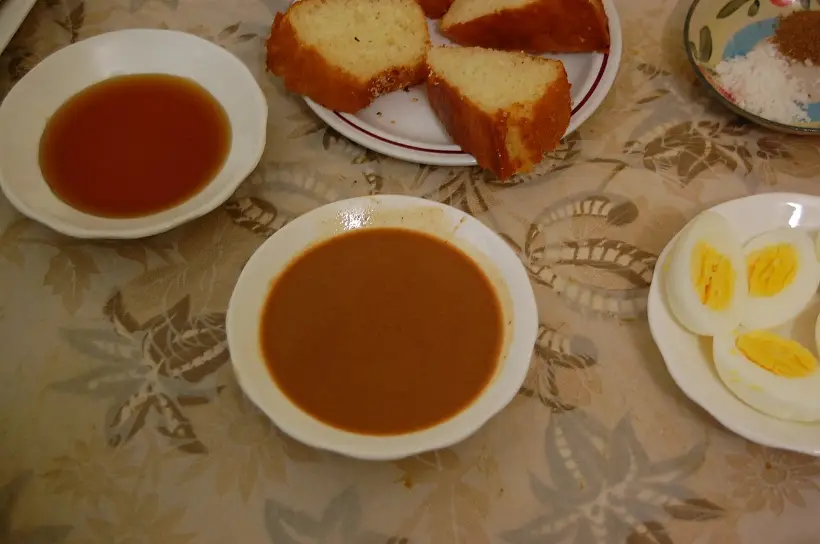
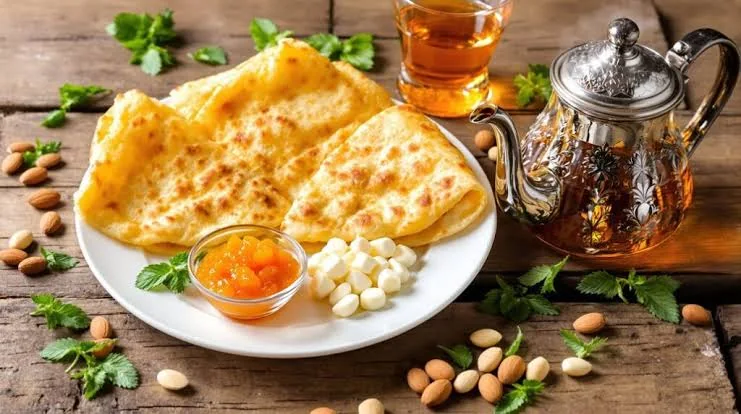
A traditional Moroccan breakfast brings together homemade flatbreads and pancakes (msemen, baghrir, harcha), bread dipped in olive oil, honey and amlou, eggs, olives and, of course, a glass of mint tea. Sweet and savoury share the same table, and everything is shared. Here are the great classics, with two mini-recipes that are easy to recreate at home.
Key facts
- Drinks: mint tea, milky coffee and freshly squeezed orange juice
- Breads: msemen (flaky, pan-fried), baghrir (the "thousand-hole" pancake) and harcha (semolina and butter)
- For dipping: olive oil, honey, butter and amlou (almonds, argan oil, honey)
- Savoury: eggs, olives, fresh cheese (jben) and, in winter, a broad bean soup called bissara
- Mini-recipes: harcha in about 30 minutes, baghrir in about an hour including resting
- At the auberge: a homemade breakfast is included in the price of every suite
What do Moroccans eat for breakfast?
First on the table comes round bread, dipped in olive oil and then in honey or amlou. Alongside it you will find the day's flatbreads, a bowl of olives, fresh cheese and eggs, fried or as an omelette. In family homes the flatbreads are often made at dawn, or the night before and warmed up in a pan. In the mountains, a favourite is the Berber omelette: eggs cooked with tomatoes, onions and cumin in a small tagine.
At weekends or when guests are expected, the spread grows: sfenj doughnuts bought hot in town, pancakes soaked in melted butter and honey, seasonal fruit. In winter, particularly in the north of the country, bissara, a purée of dried broad beans with cumin and olive oil, warms people up before a day's work.
Which flatbreads should you try at a Moroccan breakfast?
Msemen
Msemen is a square, flaky flatbread: a dough of flour and fine semolina is stretched paper-thin with oil, folded into a square and cooked in a pan. It is eaten hot with honey or amlou, or stuffed with onions and spices.
Baghrir
Nicknamed the "thousand-hole pancake", baghrir is a thick semolina crêpe cooked on one side only. Its holes soak up a mixture of melted butter and honey.
Harcha
Harcha is a small, crumbly semolina and butter griddle cake, cooked in a dry pan. It is the easiest of the three to get right.
How do you make harcha at home?
For about ten griddle cakes:
- 250 g fine or medium semolina
- 60 g melted butter
- 1 tablespoon sugar
- 1 teaspoon baking powder
- A pinch of salt
- About 150 ml milk
- Mix the semolina, sugar, salt and baking powder, then rub in the melted butter with your hands.
- Add the milk little by little until you have a soft, slightly sticky dough, and leave it to rest for 10 minutes.
- Shape into discs about 1 cm thick and roll them in a little extra semolina.
- Cook in a dry non-stick pan over low heat for 5–7 minutes on each side, until golden.
Harcha is best eaten warm, split open and spread with butter and honey, or with a little fresh cheese.
How do you get baghrir, the thousand-hole pancake, right?
For about fifteen pancakes:
- 250 g fine semolina
- 50 g plain flour
- 1 tablespoon sugar
- 1 teaspoon dried yeast
- 1 teaspoon baking powder
- A pinch of salt
- About 500 ml lukewarm water
- Blend all the ingredients for 2–3 minutes to make a smooth, runny batter.
- Cover and leave somewhere warm for 30–45 minutes, until bubbles appear.
- Heat a non-stick pan over a medium heat, without any fat, and pour in a small ladle of batter.
- Cook on one side only, without flipping, until the surface is covered in holes and dry to the touch, about 1–2 minutes.
- Lay the pancakes out on a tea towel without stacking them while hot, then drizzle with melted butter mixed with honey.
What do Moroccans drink with breakfast?
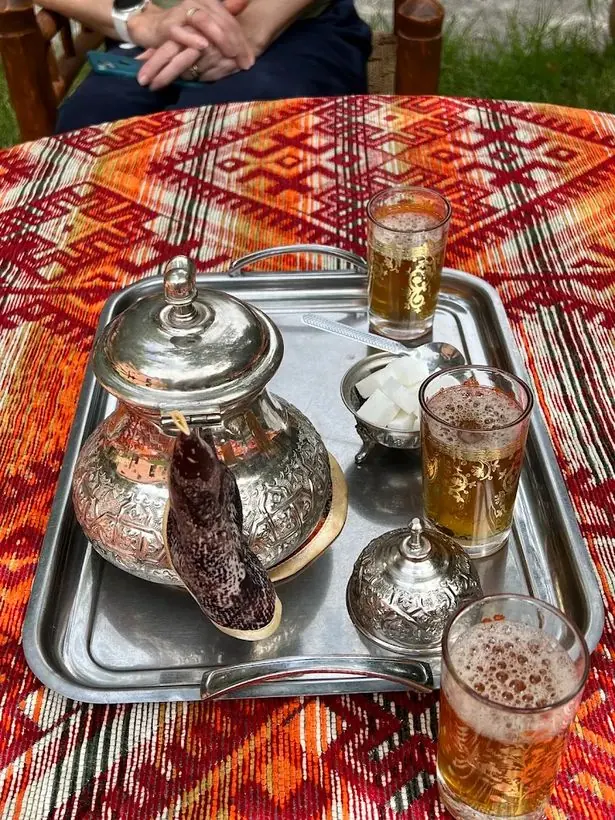
Mint tea almost always accompanies the first meal of the day, traditionally quite sweet. Milky coffee, ordered as "nous-nous" (half coffee, half milk), and fresh orange juice are just as common. The juice is especially good from late autumn to spring, when Moroccan oranges are in season. For the full ritual and recipe, read our article on how to make Moroccan mint tea.
What is amlou, the Berber spread?
Amlou is a blend of roasted almonds, argan oil and honey from the Souss region and the Anti-Atlas. Spread on warm bread or msemen, it is excellent fuel for a morning's walk. We have devoted a whole article to it: our homemade amlou recipe.
Where can you enjoy a Moroccan breakfast in the Atlas Mountains?
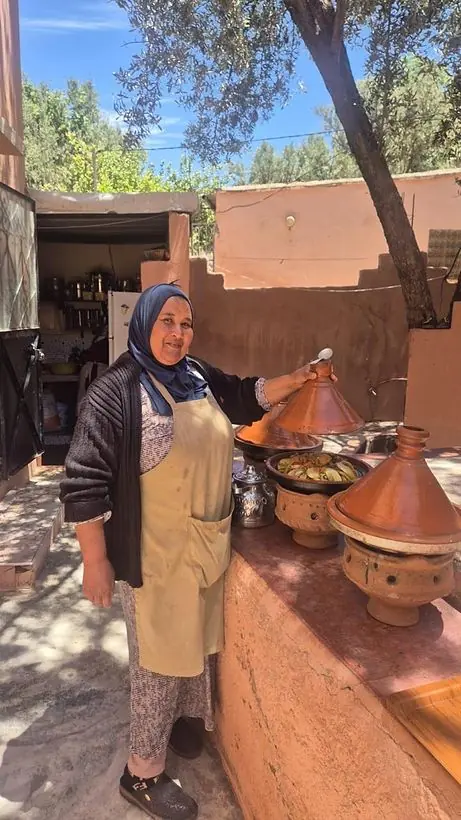
At Auberge Le Mouflon in Ouirgane, a homemade breakfast is included in the price of our family suites and double suite. It draws on these Moroccan classics; ask us what will be on the table during your stay, or let us know about any dietary needs. It is the perfect start before a walk in the valley: our complete guide to Ouirgane has ideas for the rest of the day, and our restaurant takes over for lunch or dinner, by reservation.
Book your stay, breakfast included
To start your days with a real Moroccan breakfast between lake and mountains, book directly on our website, with no middleman and no online payment. Any questions? Message us on WhatsApp.
Frequently asked questions
Is a Moroccan breakfast sweet or savoury?
Both at once: honey, jam, amlou and buttery pancakes sit next to olives, eggs, fresh cheese and, in winter, bissara. Bread dipped in olive oil bridges the two, and everyone builds their own plate.
What is the difference between msemen and baghrir?
Msemen is a stretched and folded dough cooked on both sides, giving a square, flaky flatbread. Baghrir is a runny, yeasted batter cooked on one side only, producing a soft pancake covered in tiny holes.
Is breakfast included at Auberge Le Mouflon?
Yes, a homemade breakfast is included in the price of all our suites, from 500 MAD a night for the double suite or the pool-view family suite, and from 600 MAD for a family suite sleeping up to four. Book direct on our website or via WhatsApp.
What do Moroccans eat in the morning during Ramadan?
People who are fasting do not eat during daylight: they have a pre-dawn meal, called shour, and break the fast at sunset with ftour. The sunset meal borrows much from breakfast, such as msemen, baghrir, eggs and dates, served with harira soup.
Good tips from the High Atlas
One letter per season: hikes, Rachida’s recipes and early availability. No spam.