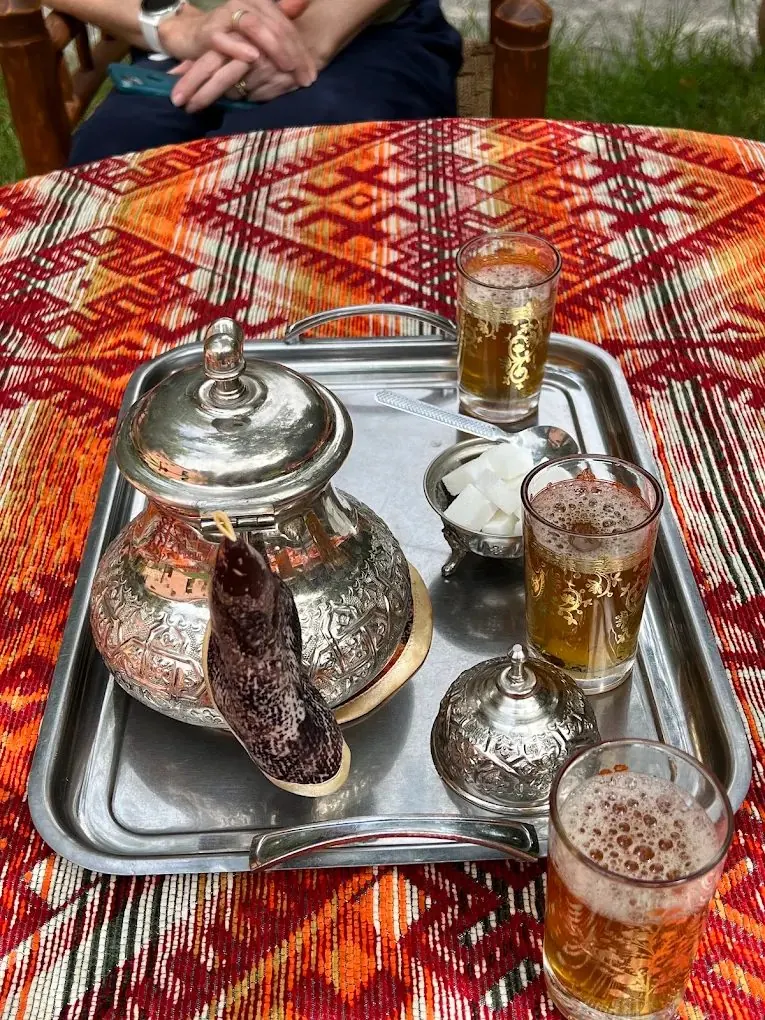
Moroccan mint tea is made with Chinese gunpowder green tea, a big handful of fresh spearmint and sugar, brewed together in a metal teapot and poured from a height into small glasses. Allow about ten minutes for a pot that fills four to six glasses. More than a drink, it is a ritual of hospitality: in Morocco it is offered to every visitor, from Marrakech living rooms to village homes in the High Atlas.
Key facts
- Ingredients: gunpowder green tea, fresh spearmint (nana), sugar and boiling water
- Proportions: 1 tablespoon of tea and a big handful of mint for a teapot of about 75 cl
- Time: about 10 minutes, including 3–5 minutes on the heat
- Serving: poured from a height to create a froth, glasses filled two-thirds full
- In winter in the Atlas: wormwood (chiba), lemon verbena (louiza) or thyme are sometimes added
- History: green tea only became widespread in Morocco in the 19th century
Where does Moroccan mint tea come from?
Green tea is thought to have reached Morocco by the 18th century as a diplomatic gift reserved for the royal court. It only spread to the wider population in the 19th century, thanks to British trade through ports such as Mogador (today's Essaouira) and Tangier. Combined with fresh mint and sugar, long sold in conical loaves, it became the national drink, served at any hour.
Mint tea is the symbol of welcome: it is made when a guest arrives, after meals and during long conversations. Whoever pours it holds a place of honour.
What ingredients do you need for mint tea?
For a teapot of about 75 cl, or 4–6 small glasses:
- 1 heaped tablespoon of Chinese gunpowder green tea
- 1 large handful of fresh spearmint (nana), stalks included
- 4–6 sugar cubes, or 2–3 tablespoons, adjusted to taste
- 75 cl boiling water, plus two small glasses for rinsing the tea

At the market, mint is sold in generous bunches. At the Saturday souk in Asni, about 15 km from Ouirgane, you will also find teapots, trays and glasses: our article on the Berber souk in Asni will help you plan your visit.
How do you make Moroccan mint tea step by step?
- Rinse the empty teapot with boiling water to warm it, then empty it.
- Put the tea in the pot, add a small glass of boiling water, swirl for a minute and pour this first brew into a glass: it is the "spirit" of the tea, so keep it.
- Add a second small glass of boiling water, swirl quickly and discard it: this rinse removes some of the bitterness and dust.
- Pour the "spirit" back into the pot, then add the washed mint and the sugar.
- Fill with boiling water and set the pot over a low heat for 3–5 minutes, until it just simmers, without letting it boil for long.
- Pour out a glass and tip it back into the pot two or three times to mix in the sugar.
- Taste from a small glass and adjust the sugar if needed.
- Serve by gradually lifting the teapot to create a good froth, filling the glasses two-thirds full.
Why is mint tea poured from so high?
Pouring from a height does several jobs: it aerates the tea, which rounds off its flavour; it cools it slightly before it reaches your lips; and it builds a froth on top, a sign of well-made tea. It is also an elegant gesture that many Moroccans learn as children. Start close to the glass, lift the pot slowly, then lower it again to stop the stream without splashing.
What do the three glasses of tea mean?
Tradition says at least three glasses should be served. A saying from the Sahara compares the three rounds to life, love and death, because the taste changes from one glass to the next as the leaves keep brewing. In the Atlas people do not always count, and politely declining a third glass offends no one; accepting the first, however, is a real mark of respect. To understand these codes of hospitality, read our article on Berber culture in the High Atlas.
Which Atlas herbs go into winter tea?
When fresh mint is scarce and the nights turn cold, mountain families enrich their tea with a few sprigs of very bitter wormwood (chiba), lemon verbena (louiza) in the evening, pennyroyal (fliyou) or wild thyme picked on the slopes. Use chiba sparingly: one small sprig is enough. It is not recommended during pregnancy, and if you are unsure or taking medication, ask a doctor first.
Where can you drink real mint tea in the High Atlas?
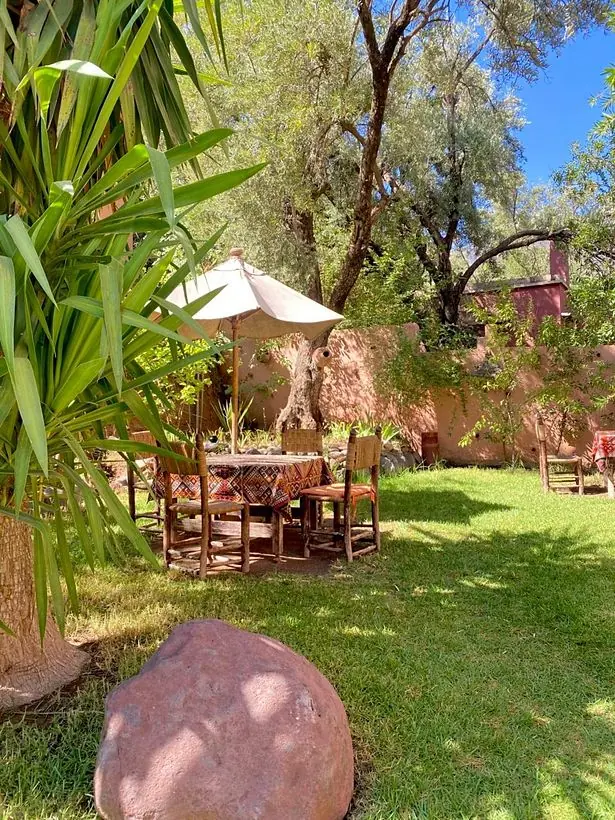
The best tea is the one you drink without looking at your watch. At Auberge Le Mouflon, about 1 h 15 from Marrakech, it happily accompanies the Moroccan breakfast included with our suites and is best enjoyed on the terraces overlooking the lake and mountains. Discover our family-run auberge and, for a full meal before your tea, our restaurant, by reservation.
Book your stay by Lake Ouirgane
To share a glass of Moroccan mint tea with Abdellah and Rachida, book directly on our website, with no middleman and no online payment, or message us on WhatsApp.
Frequently asked questions
Does Moroccan mint tea contain caffeine?
Yes. Green tea contains caffeine, in amounts that vary with the dose and brewing time. In the evening, ask for a lighter pot or a lemon verbena (louiza) infusion, which is caffeine-free.
Is it rude to refuse tea in Morocco?
Declining is not an insult if you do it with a smile and a thank you, hand on heart. Accepting at least one glass, though, remains the best way to respond to your hosts' hospitality.
Can you make mint tea with dried mint?
Yes, but the flavour will be more herbal and less fresh. Fresh spearmint remains the standard in Morocco; otherwise, allow about a tablespoon of dried mint per pot and taste before serving.
How do you ask for less sugar in your tea in Morocco?
Tea is traditionally very sweet, but asking for less is perfectly normal. In Darija, say “chwiya sukkar” for a little sugar or “bla sukkar” for none at all, and your hosts will happily oblige.
Good tips from the High Atlas
One letter per season: hikes, Rachida’s recipes and early availability. No spam.