
Moroccan seven-vegetable couscous is the country's big Friday family meal: semolina steamed three times over a broth in which meat, chickpeas and seasonal vegetables slowly simmer. Allow about 2½ hours to serve six, much of it spent waiting while the broth fills the house with its aroma. Here is the traditional method, using a couscoussier, as it is made in High Atlas homes.
Key facts
- Serves 6: about 750 g of medium-grain couscous
- Time: 30–40 minutes' hands-on work, 2–2½ hours in total
- Kit: a couscoussier (pot with a steamer basket on top) and a large, wide serving dish
- The vegetables: carrots, turnips, courgettes, pumpkin, cabbage, tomatoes and onions, plus chickpeas
- Key technique: three rounds of steaming, fluffing the grains by hand in between
- Heritage: couscous has been on UNESCO's Intangible Cultural Heritage list since 2020
Why do Moroccans eat couscous on Fridays?
Friday is the day of the main midday prayer. After the mosque, the family gathers around a single large dish in the middle of the table, and everyone eats from the section in front of them. Couscous is also the dish of celebrations and big occasions: it is shared, sent round to neighbours and often prepared by several pairs of hands.
Couscous has Amazigh (Berber) roots. In 2020 UNESCO inscribed the knowledge and practices linked to making and eating it on its Intangible Heritage list, in a joint nomination by Algeria, Mauritania, Morocco and Tunisia. In Atlas villages you will also find more rustic barley couscous.
What goes into Moroccan seven-vegetable couscous?
The number seven is symbolic: each family builds its own list according to the market and the season. For six people:
- 750 g medium durum wheat couscous
- 1 kg lamb (shoulder or neck) or beef, in large pieces
- 2 onions and 3 tomatoes
- 4 carrots and 3 turnips, halved lengthways
- 3 courgettes, halved
- 400 g pumpkin in large wedges, skin on
- ¼ white cabbage in two pieces
- 200 g chickpeas soaked overnight (or one drained tin)
- A bunch of coriander and parsley
- 1 teaspoon each of ground ginger, turmeric and black pepper, salt, a few saffron threads
- 6 tablespoons oil, plus 40 g butter or 1 tablespoon smen
- About 3 litres of water
How do you make couscous step by step?

- In the bottom of the couscoussier, brown the meat for 5 minutes in the oil with the sliced onions, grated tomatoes and spices.
- Add the chickpeas, herb bunch and water. Bring to the boil, then simmer for 45 minutes.
- Meanwhile, tip the couscous into the dish, sprinkle it with a glass of salted water and rub it between your palms to separate the grains. Add a drizzle of oil and leave it to swell for 10 minutes.
- First steaming: put the couscous in the basket on top of the pot without packing it down. Once steam rises through the surface, count 15 minutes.
- Turn the couscous back into the dish, sprinkle with half a glass of water and break up any lumps with oiled hands.
- Add the carrots, turnips and cabbage to the broth, then, 15 minutes later, the more delicate courgettes and pumpkin.
- Second steaming, 15 minutes, then fluff the grains again and salt them lightly.
- Third steaming, 10–15 minutes, while the vegetables finish cooking.
- Work the butter or smen into the hot couscous, separating the grains.
- Pile the couscous into a dome, make a well in the centre, add the meat, arrange the vegetables around it like spokes and spoon over some broth. Serve the rest of the broth on the side.
How do you keep couscous light and fluffy?
It is all about air. The grains must never touch the broth: if the pot is too full, ladle some water out. If steam escapes between basket and pot, wrap the join with a damp cloth or a strip of flour-and-water paste. Finally, lift and toss the hot couscous rather than pressing it: it should run through your fingers.
What is tfaya?
For a festive version, the dome is topped with tfaya: onions slowly caramelised with raisins, a little sugar, cinnamon and butter. That sweet-and-savoury contrast is loved all over Morocco.
How long does traditional couscous take?
With a couscoussier, allow 2 to 2½ hours from start to finish, but only about 40 minutes of actual work. The quick method, rehydrating the grains with hot stock, takes 20 minutes; it will do in a pinch, but lacks the lightness and flavour of steamed couscous. On feast days many families get the broth going by mid-morning.
What do you serve with seven-vegetable couscous?
It comes with a bowl of broth, a little chilli for those who like it, and sometimes a glass of lben, a fermented milk. Seasonal fruit and mint tea follow. If you enjoy slow-cooked dishes, try our Berber tagine recipe, then explore the great dishes of Berber food. And to buy your vegetables like the locals do, nothing beats the Saturday Berber souk in Asni.
Where can you eat homemade couscous near Marrakech?
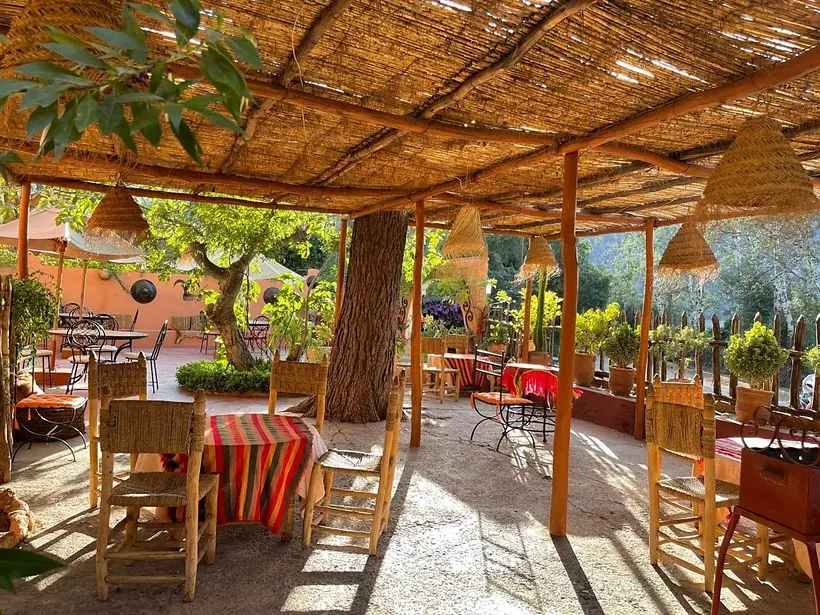
At our auberge, on the shore of Lake Ouirgane about 1 h 15 from Marrakech, couscous is made on request because it takes time: let us know in advance for lunch or dinner. The auberge restaurant also welcomes non-residents by reservation, and our family suites and double suite let you round off the meal with a quiet night, homemade breakfast included.
Order your couscous and book direct
Coming with family or friends? Book your stay directly on our website, with no middleman and no online payment, or send us a WhatsApp message saying which day you would like to taste our Moroccan seven-vegetable couscous.
Frequently asked questions
Can you make couscous without a couscoussier?
Yes: set a metal colander over a large pan and seal the gap with a damp tea towel, making sure the colander does not touch the broth. The result is slightly less even, but the grains stay far lighter than with the quick soaking method.
Which couscous grain should you use for Moroccan couscous?
Medium-grain durum wheat couscous is the usual choice for vegetable couscous, while fine grain is mostly kept for sweet dishes such as seffa. In the Atlas you will also find barley couscous, called belboula, which has a more rustic taste.
Can seven-vegetable couscous be vegetarian?
Yes. Leave out the meat, add more chickpeas and an extra onion and tomato to give the broth body. Swap the butter or smen for olive oil and the dish becomes fully vegan.
How long does leftover couscous keep?
Store the grains and the broth separately in the fridge for two to three days. To reheat the couscous, steam it again for about ten minutes rather than using the microwave, and it will regain its lightness.
Good tips from the High Atlas
One letter per season: hikes, Rachida’s recipes and early availability. No spam.