
Berber food is the farmhouse cooking of Morocco's mountains and countryside: grains (wheat, barley, maize), olive or argan oil, garden vegetables and a little meat, slowly simmered in a tagine or steamed for couscous. In the High Atlas you taste it at its best in villages and family homes rather than in city restaurants. Here are the dishes to know and where to try them around Ouirgane.
Key facts
- Staples: grains, olive and argan oil, butter and smen, seasonal vegetables, modest amounts of meat
- Signature dishes: tagine, couscous (including barley couscous), harira, bissara, berkoukes
- Bread: baked in clay ovens, cooked as griddle breads or on hot stones
- Flavours: warm spices (ginger, cumin, turmeric, saffron), fresh herbs, rarely fiery chilli
- Mountain produce: walnuts, almonds, apples and honey, depending on altitude and season
- Where to taste it: the Atlas valleys, including Ouirgane, about 1 h 15 from Marrakech
What is Berber food?
The Berbers, or Amazigh, are the indigenous peoples of North Africa. Their cooking is the foundation of Moroccan cuisine, enriched over the centuries by Arab, Andalusian and Jewish influences and refined in imperial cities such as Fez and Marrakech. In the mountains it has stayed simple and seasonal: people cook what the irrigated terraces, the flock and the fruit trees provide.
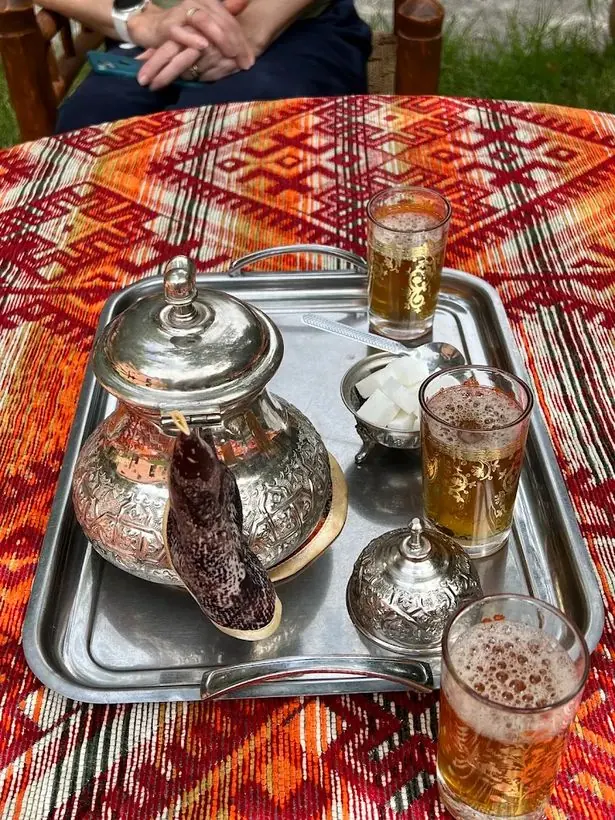
It relies on slow cooking, a measured hand with spices and sharing: meals are often eaten around a single dish set in the middle of the table, scooped up with bread. Smen, a salted and aged clarified butter, gives some dishes a strong, distinctive flavour typical of rural cooking, and a meal usually ends with a glass of mint tea.
Which Berber dishes should you try in the High Atlas?
Tagine
The everyday dish: meat and vegetables stacked in a pyramid and cooked gently in the clay pot that shares its name. To make it at home, follow our Berber tagine recipe.
Couscous
Known as seksu in Amazigh, couscous is the dish of Fridays and celebrations. In the Atlas you will also find a more rustic barley couscous, sometimes served with lben, a fermented milk. Our Moroccan seven-vegetable couscous recipe explains the steaming method.
Soups: harira, bissara, berkoukes
Harira, a tomato, lentil and chickpea soup fragrant with herbs, is inseparable from breaking the fast during Ramadan. Bissara, a purée of dried broad beans with cumin and olive oil, warms up winter mornings. Berkoukes, large hand-rolled pasta pearls, are cooked as a soup with vegetables.
Mechoui and grills
For big celebrations, a whole lamb slow-roasted until it falls apart, known as mechoui, is shared by hand. On market days, kebabs and kefta sizzle over charcoal.
Porridges and sweet things
Tagoula, a barley or maize porridge served with argan oil or butter and honey, is often made for Yennayer, the Amazigh New Year in mid-January. Amlou, a blend of almonds, argan oil and honey, goes with bread and tea.
Tagine or tanjia: what is the difference?
They are often confused. A tagine is a shallow dish topped with a conical lid that sits on the heat. Tanjia, a Marrakech speciality, is an amphora-shaped clay jar filled with meat, preserved lemon, garlic, cumin, saffron and smen, then handed to the stoker of a hammam furnace, where it cooks for hours in the embers. It is traditionally a men's dish, prepared among friends. If you pass through Marrakech before heading up into the Atlas, try both.
What bread do people eat in Atlas villages?
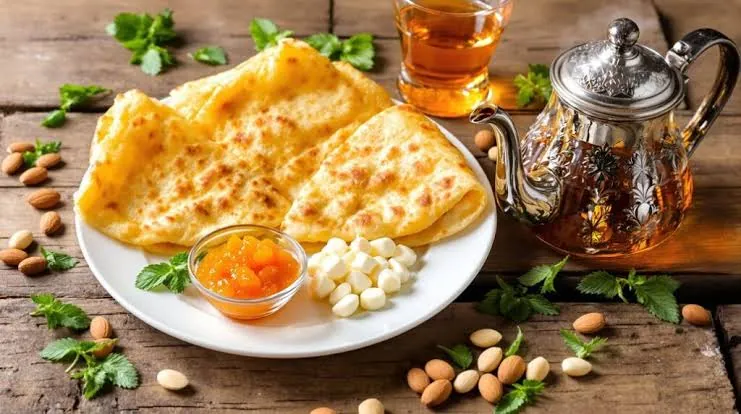
Bread comes with every meal and doubles as cutlery. In villages many families bake it in a clay oven next to the house, or on a griddle set over the fire. In the Souss and parts of the Atlas there is also tafarnout, a bread baked on hot stones. Semolina griddle cakes and msemen complete the picture, especially at breakfast. Bread is treated with respect: a piece found on the ground is often picked up and set aside rather than thrown away.
Which seasonal produce can you find in the High Atlas?
Depending on altitude, the valleys of the High Atlas produce walnuts, almonds, apples, cherries, figs or olives. Mountain honey, locally pressed olive oil and wild herbs (thyme, pennyroyal, wormwood) flavour both food and tea. In spring, broad beans and peas go into tagines; autumn is the season for walnuts and apples. Weekly markets, such as the Saturday souk in Asni, are the best place to discover them.
Where can you eat Berber food around Ouirgane?
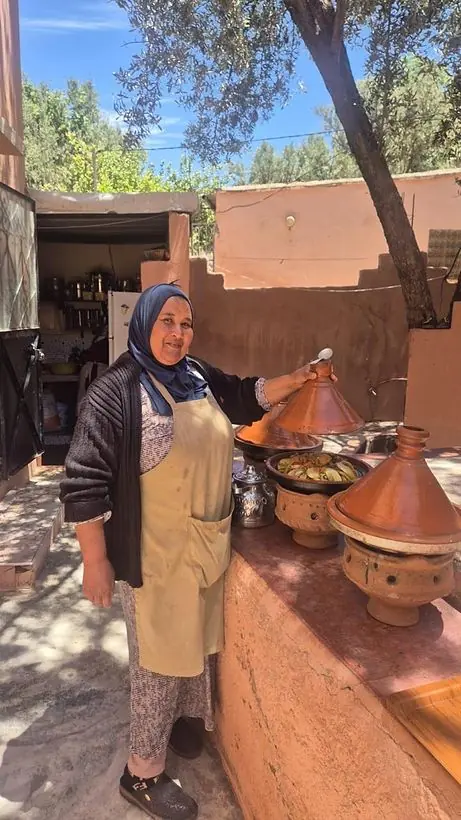
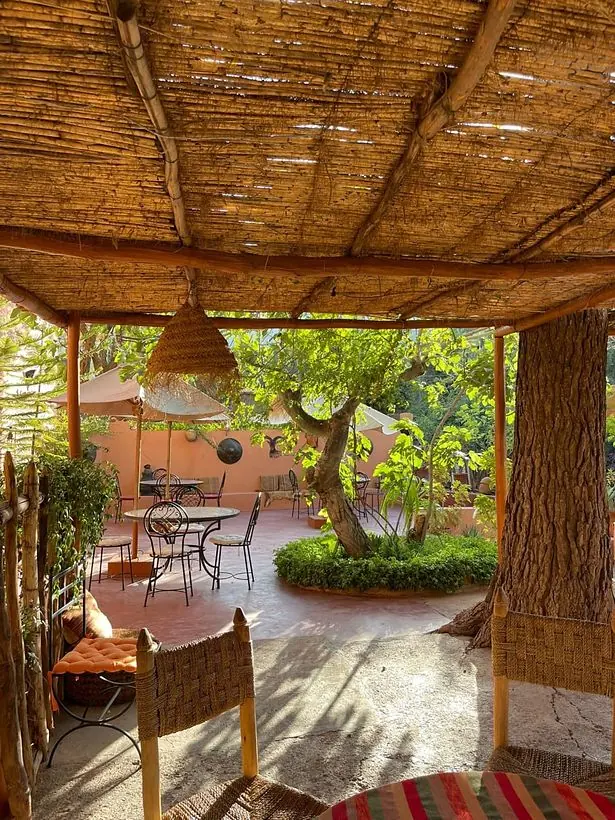
On market days, grill and tagine stalls feed traders and visitors, and you will find a few small restaurants along the road from Marrakech. On a hike with a local guide, you may also end up sharing tea in a village. For a proper sit-down meal, our restaurant in Ouirgane serves Moroccan family cooking made to order: tagines, and couscous on request, to be booked in advance, even if you are not staying with us. If you want to learn, the cooking class with Rachida is one of the activities organised by the auberge. To plan the rest of your stay, see our complete guide to Ouirgane.
Book your table or your stay
To discover Berber food on the shore of Lake Ouirgane, book directly on our website, with no middleman and no online payment, or message us on WhatsApp to reserve lunch or dinner.
Frequently asked questions
What is the difference between Berber and Moroccan food?
Moroccan cuisine is a blend: it rests on a Berber base (couscous, tagines, grains, argan oil) enriched with Arab, Andalusian and Jewish influences, especially in the cities. Berber cooking, more rural, stays simpler, more seasonal and less given to sweet-and-savoury combinations than the urban cooking of Fez or Marrakech.
Is Berber food suitable for vegetarians?
Largely, yes: vegetable tagines, bissara, lentils, vegetable couscous and flatbreads are easily made without meat, although some broths do contain it. Always tell your hosts in advance so they can adapt the recipes.
What is the most famous Berber dish?
Couscous is probably the most emblematic: the knowledge and practices around it have been on UNESCO's intangible heritage list since 2020. The tagine follows close behind and remains the everyday dish in Atlas villages.
Do people eat with their hands in Berber villages?
Yes, traditionally with the right hand and a piece of bread used as a spoon, around a shared dish. Nobody will mind if you ask for a fork; just remember to wash your hands before the meal, which is often offered at the table.
Good tips from the High Atlas
One letter per season: hikes, Rachida’s recipes and early availability. No spam.